LET’S GET DIGITAL is your gateway to the innovators and ideas transforming the digital infrastructure industry. From wireless telecom to fiber networks and data centers, this podcast explores all things digital infrastructure—diving into the trends, technologies, and people shaping the future of connectivity. 

Hosted by Broadstaff CEO Carrie Charles, each episode features candid conversations with top industry leaders, uncovering the intersection of technology, talent, and transformation. Discover the innovations, leadership strategies, and company cultures driving success in this rapidly evolving landscape. 

Whether you’re a business leader, a professional aiming to grow, or simply passionate about digital innovation, LET’S GET DIGITAL is your go-to resource for staying ahead in this dynamic industry. Tune in and let’s get digital. 
All Episodes

Latest Episodes

All Episodes →
#187

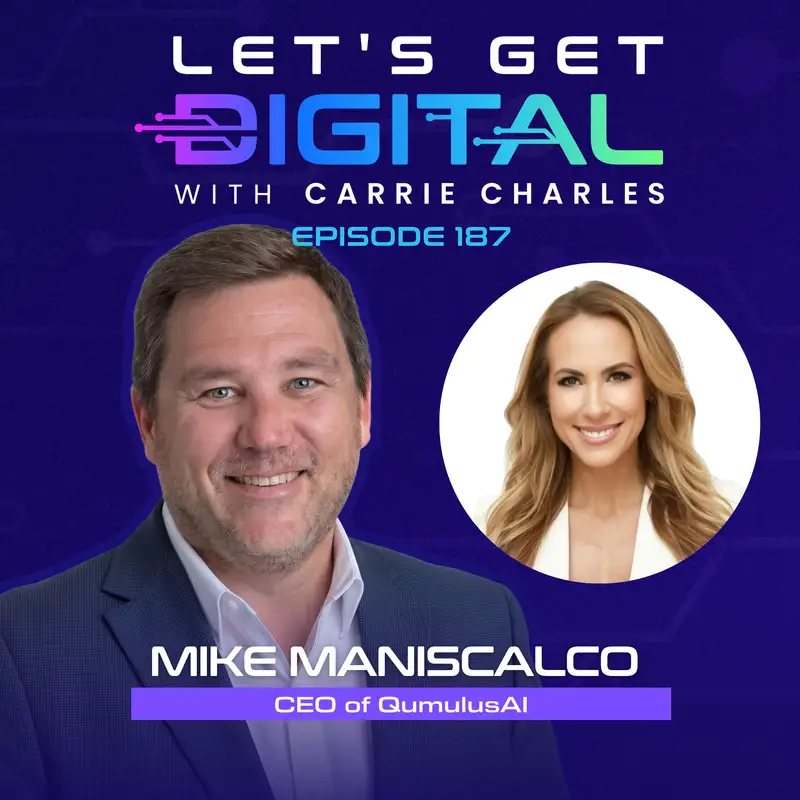
Moving Compute at the Speed of Demand with Mike Maniscalco of QumulusAI

In this episode, Mike Maniscalco, CEO of QumulusAI, shares how his background as a computer scientist and software entrepreneur led him into AI infrastructure and ultimately to QumulusAI. Mike explains how the rapid advancement of AI, particularly reasoning models and agentic tools, made one thing increasingly clear: more capable AI requires more tokens, and more tokens require more compute infrastructure. That realization brought him back to the infrastructure layer powering the AI revolution. Mike discusses QumulusAI’s differentiated approach to delivering GPU compute through a distributed, inference-first model built around “hyperspeed.” Rather than focusing exclusively on massive, multi-year hyperscale campuses, the company identifies smaller pockets of existing powered data center capacity that can be upgraded and brought online faster. This allows QumulusAI to respond to customers who need compute in months rather than waiting years for new infrastructure. The conversation explores why inference represents such a significant opportunity as AI moves from training models to putting them into production. Mike also breaks down QumulusAI’s FACTS framework (flexibility, access, cost, trust, and speed) and explains how flexibility across locations, vendors, architectures, and supply chains can help accelerate deployment. Looking ahead, Mike believes AI infrastructure demand is still in its early innings. As multimodal AI, agentic applications, robotics, autonomous vehicles, and other emerging use cases consume more compute, he sees distributed infrastructure becoming increasingly important, especially as latency and location matter more. QumulusAI’s ambition is to evolve into a true AI cloud capable of moving compute at the speed of demand.
#186

Who Will Build the AI Boom? Solving America’s Skilled Labor Crisis with Mike Greenawalt of the Greenawalt Foundation

In this episode, Mike Greenawalt, former CEO of Rosendin and founder of the Greenawalt Foundation, shares how his journey from electrical apprentice to leading one of the nation’s largest electrical contractors shaped his mission to create debt-free career pathways into the skilled trades. Mike explains why apprenticeships gave him an opportunity traditional education could not, and why America must rethink how it identifies, develops, and invests in the talent needed to build the future of AI and digital infrastructure. Mike discusses the skilled labor crisis facing the data center industry as AI drives construction at unprecedented speed and scale. While shortages of power, land, equipment, and water receive significant attention, he argues that the shortage of qualified electricians and other tradespeople may be even more critical. Existing apprenticeship programs were already struggling to replace an aging workforce, and the AI boom has accelerated demand far beyond their ability to scale. The conversation explores how the Greenawalt Foundation is helping students and people in career transition enter registered apprenticeship programs by funding tuition, books, tools, safety equipment, and other barriers to entry. Mike also shares the success of the pre-apprenticeship model he helped launch with Grand Canyon University, which has now served more than 1,000 students and expanded beyond electrical training into construction, cleanroom technology, and CNC machining. Looking ahead, Mike believes the companies driving the AI boom must take greater responsibility for developing the workforce required to build it. From apprenticeship programs located directly on major data center construction sites to stronger partnerships among industry, universities, nonprofits, and communities, he sees an opportunity to train tens of thousands of skilled workers while creating life-changing careers without traditional college debt.
#185

AI Meets the Jobsite: The New Reality of Data Center Construction with Jessica Herrala

In this episode, Jessica Herrala, Vice President of North America at Buildots, shares how three decades in construction led her from some of the industry's largest contractors into the fast-moving world of construction technology. Jessica explains how Buildots is using AI-powered progress tracking to bring objective, real-time data to complex construction projects, helping contractors and data center developers replace guesswork with greater visibility, accountability, and confidence. Jessica discusses how Buildots combines 3D models, project schedules, and site imagery to compare planned versus actual construction progress. By tracking activities and identifying potential delays earlier, the platform helps teams make better decisions before schedule problems become costly—an increasingly important capability as massive data center projects are built at unprecedented speed and scale. The conversation explores how AI is changing the jobsite amid one of construction's greatest challenges: a shortage of skilled labor. Jessica explains that AI isn't about replacing people, but enabling teams to spend less time manually tracking progress and more time focused on safety, quality, planning, and delivering more with limited resources. Looking ahead, Jessica believes technology and people must evolve together. She shares lessons on building high-performing teams, leading with authenticity, developing women in male-dominated industries, and embracing change with confidence. As AI transforms data center construction, the organizations that succeed will be those that combine objective data, adaptable leadership, and technology with deep industry expertise.
#184

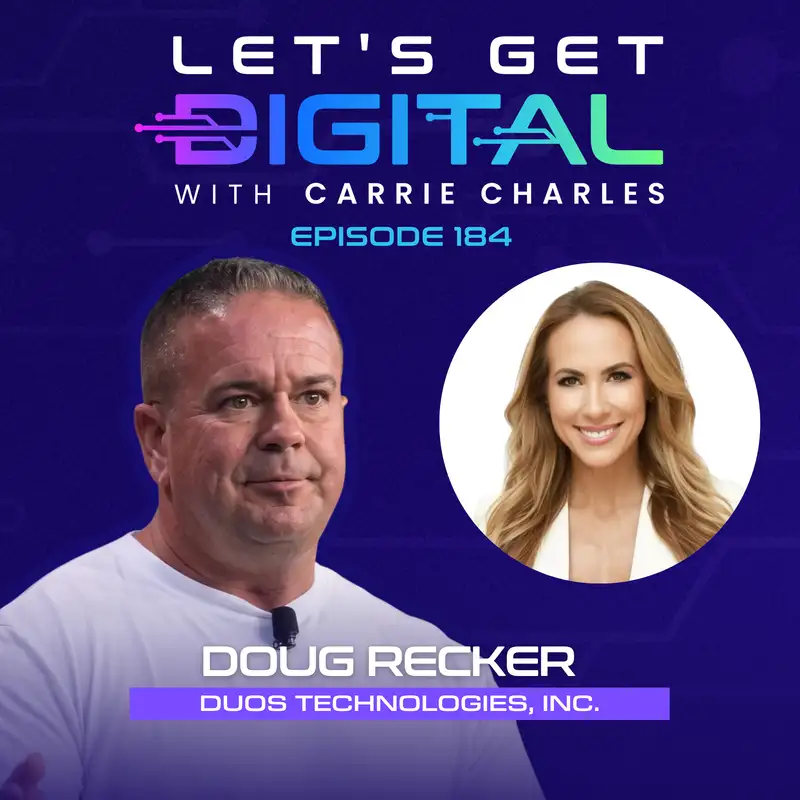
Doug Recker on How Duos Technologies Is Bringing GPU Power and Edge AI Closer to the Customer

In this episode, Doug Recker, CEO of Duos Technologies Group, shares how a career that began in the U.S. Marine Corps and door-to-door telecom sales ultimately led him to building data centers and pioneering a modular approach to edge infrastructure. Drawing on nearly three decades of experience in telecom, fiber, and data centers, Doug explains how Duos Technologies is bringing GPU power and high-performance compute closer to customers in underserved Tier 3 and Tier 4 markets. Doug discusses how Duos Edge is deploying modular data center clusters in communities where connectivity, available compute, and traditional data center capacity have historically been limited. After initially deploying 300-kilowatt pods, the company discovered growing demand for 1- to 15-megawatt facilities from customers looking for capacity to run GPU clusters. By targeting stranded power and partnering with local schools, healthcare systems, governments, and carriers, Duos is creating infrastructure that can improve connectivity while bringing new revenue, tax dollars, and AI workloads into local communities. The conversation explores why edge computing is becoming increasingly important as inference, autonomous vehicles, agriculture, and other AI-driven applications require compute closer to the end user. Doug explains how Duos is deploying more than 2,000 GPUs in modular environments, using closed-loop cooling systems that require very little additional water, and protecting high-value equipment with a patented clean-room entry system designed to reduce dust, pollen, and other contaminants. He also shares how Duos Technologies Group combines Duos Edge with Infrastructure Technologies Group, which provides critical infrastructure equipment to data center operators. Looking ahead, Doug sees enormous opportunity in bringing smaller, distributed GPU clusters closer to where data is created and consumed. Rather than competing for massive gigawatt-scale campuses, Duos is focused on rapidly deploying repeatable 1- to 15-megawatt sites across the country. Underpinning that growth is a team-first culture built around passion, accountability, execution, and doing what you say you will do—principles Doug believes are essential for founders, leaders, and companies navigating the rapidly evolving AI infrastructure market.
#183

The Next Hyperscale Frontier May Not Be Where You Think: Seth Arndorfer on North Dakota’s Rise

In this episode, Seth Arndorfer, CEO of DCN, shares how an unexpected career journey from agriculture and college rodeo to telecommunications led him to the forefront of one of the industry's most exciting growth opportunities. Drawing on nearly three decades of experience, Seth explains how DCN has evolved into a critical provider of fiber connectivity, supporting government agencies, enterprises, wireless carriers, and now hyperscale data center developments across North Dakota. Seth discusses why North Dakota is emerging as an attractive destination for hyperscale infrastructure, pointing to the state's abundant energy resources, cool climate, underutilized power capacity, and extensive fiber network. He explains how DCN's collaborative model, built on partnerships among rural broadband providers, has created one of the nation's most connected states and positioned it to support the next generation of AI-driven digital infrastructure. The conversation explores the growing importance of backbone fiber capacity, the Heartland Cyber Project, and the long-term investments required to support hyperscalers as demand for AI, cloud computing, and high-capacity connectivity continues to accelerate. Seth also shares how DCN is addressing workforce challenges by investing in local talent development through partnerships with schools, colleges, and industry, building the next generation of networking and cybersecurity professionals. Looking ahead, Seth believes the future of connectivity will depend on a diverse technology ecosystem where fiber, satellite, and emerging solutions work together. As AI continues reshaping digital infrastructure, he sees North Dakota playing an increasingly important role by combining reliable connectivity, strategic infrastructure investments, and a collaborative approach to supporting long-term growth.