Carrie Charles Host

Carrie Charles

CEO and co-founder, Broadstaff

Appears in 176 Episodes

#176

Inside DC BLOX: Jeff Uphues on the Strategy Reshaping Digital Infrastructure in the Southeast

In this episode, Jeff Uphues, CEO of DC BLOX, shares how the company is reshaping digital infrastructure in the Southeast through a focused, vertically integrated strategy built on data centers, fiber networks, and cable landing stations. With more than 35 years in the communications industry, Jeff offers a candid look at scaling DC BLOX from a $5 million startup into a multi-billion-dollar platform serving hyperscalers and enterprise customers. DC BLOX’s approach is rooted in deep regional focus, targeting underserved, high-growth markets and building strong local relationships while connecting globally. Jeff explains how the company evolved from smaller edge deployments into large hyperscale campuses by listening closely to customer needs and expanding capabilities over time.A key theme is the impact of AI, which is driving unprecedented demand and fundamentally changing data center design. From liquid cooling to flexible power configurations, today’s infrastructure must support a wide range of high-density workloads. This shift has also intensified one of the industry’s biggest challenges: power. Jeff highlights the growing complexity of securing energy, including massive upfront investments and navigating utility constraints.Beyond infrastructure, Jeff emphasizes culture, built on transparency, trust, teamwork, and tenacity, as a core driver of success. He also underscores the importance of community engagement, helping local stakeholders understand the economic and social value data centers bring.Looking ahead, Jeff sees continued growth with no clear slowdown, as hyperscalers, AI companies, and enterprises drive the next wave of digital infrastructure expansion.
#175

From TIWA to CDIA: Rich Berliner on the Future of “Connected” Digital Infrastructure

In this episode, Rich Berliner, Founder of the Connected Digital Infrastructure Association (CDIA), shares a forward-looking perspective on how the industry is evolving from siloed technologies into a fully integrated, “connected” digital infrastructure ecosystem. With more than 40 years in telecom and construction, Rich brings a unique lens on how the convergence of wireless, fiber, real estate, and AI is reshaping the future of connectivity.CDIA was born from the evolution of the in-building wireless space into something much broader. Rich explains how enterprise customers—especially in real estate—no longer want fragmented solutions like DAS alone, but instead demand fully integrated offerings that combine connectivity, cybersecurity, software, and infrastructure into a single, cohesive strategy. This shift is driving greater collaboration across the industry and redefining how solutions are delivered.A key theme is the growing importance of “connected” infrastructure, where fiber, wireless, public safety systems, and building technologies must all work together seamlessly. Rich highlights how enterprise decision-making now involves multiple stakeholders—from IT to finance to operations—making it critical for providers to approach customers with a needs-based, consultative mindset rather than a product-first pitch.The conversation also explores a major technological shift: the move from CPU-based systems to GPU-driven computing, led by companies like NVIDIA. Rich explains how this transition is enabling distributed data centers and what he calls the “new edge”—a model where compute is deployed across towers, rooftops, and localized environments instead of centralized mega facilities.Looking ahead, Rich sees CDIA playing a vital role as an educational and networking hub—bringing together telecom, real estate, and technology leaders to better understand and navigate this rapidly changing landscape.
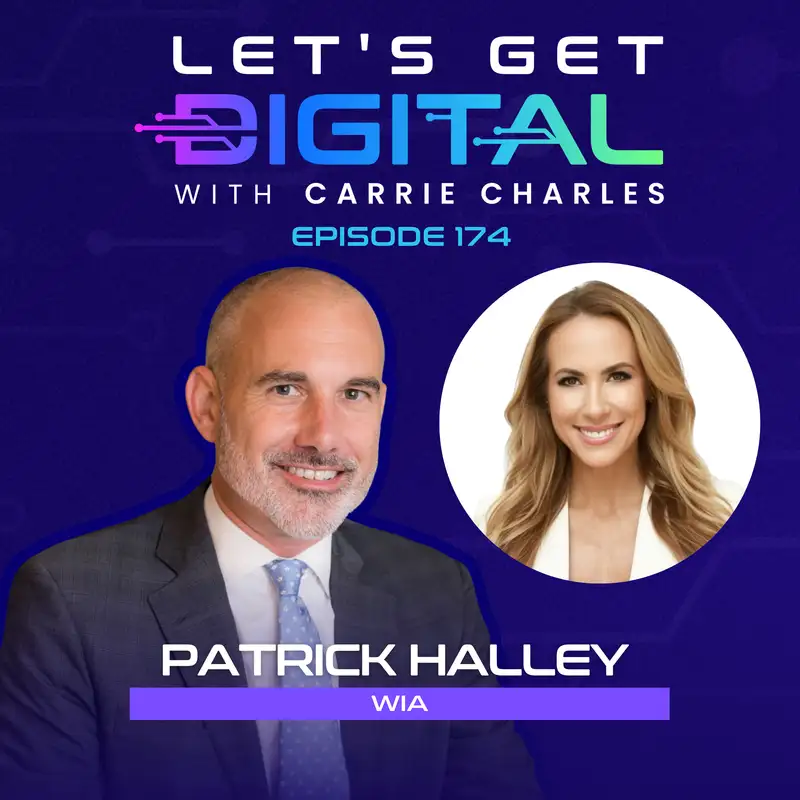
#174

From Policy to Connect X: Patrick Halley on What’s Next for Wireless Infrastructure

In this episode, Patrick Halley, President and CEO of the Wireless Infrastructure Association (WIA), shares a comprehensive view of the evolving wireless infrastructure landscape—highlighting the critical intersection of policy, investment, and emerging technologies like AI that are shaping the future of connectivity. Drawing from his leadership at WIA, Patrick offers a front-row perspective on the companies building, owning, and operating the networks that power our increasingly digital world.Today, WIA represents the full wireless ecosystem—from tower companies and carriers to OEMs and service providers—advocating for policies, education, and industry collaboration that enable continued growth. Patrick explains how the organization plays a central role in advancing infrastructure deployment through federal and state advocacy, workforce training programs, and flagship events like ConnectX.Patrick breaks down one of the most important realities in the industry: despite being in a cyclical phase, wireless infrastructure investment remains strong, with $65 billion in annual spending and continued growth in tower deployments. He emphasizes that relentless demand for data—driven increasingly by mobile-first behaviors—continues to fuel both new builds and co-location strategies across the network.A major theme throughout the conversation is the rise of AI and its growing impact on wireless networks. Patrick highlights that AI already accounts for a meaningful share of network traffic, a number expected to grow rapidly as consumers and enterprises rely more heavily on AI-powered applications. From simple mobile queries to complex AI agents handling everyday tasks, this shift is fundamentally increasing demand for faster, more robust wireless infrastructure.The discussion also explores the policy landscape, where spectrum availability and permitting reform remain top priorities. Patrick outlines ongoing efforts to free up additional spectrum, streamline deployment through predictable and transparent permitting processes, and ensure the regulatory environment supports continued innovation and investment.Looking ahead, Patrick remains bullish on the industry’s long-term outlook. While acknowledging recent workforce challenges and layoffs tied to the tail end of the 5G build cycle, he explains how future growth—driven by 6G development, AI expansion, and increasing wireless adoption—will create new opportunities across the ecosystem. He also highlights the growing demand for roles in adjacent areas like fiber and data center infrastructure.Finally, Patrick shares how WIA is addressing workforce development through its Telecommunications Education Center and registered apprenticeship programs—equipping the next generation with the skills needed across wireless, fiber, and emerging technologies.From AI-driven demand to spectrum policy and workforce transformation, this episode offers a timely and insightful look at what’s next for wireless infrastructure—and why the foundation being built today will define the connected world of tomorrow.
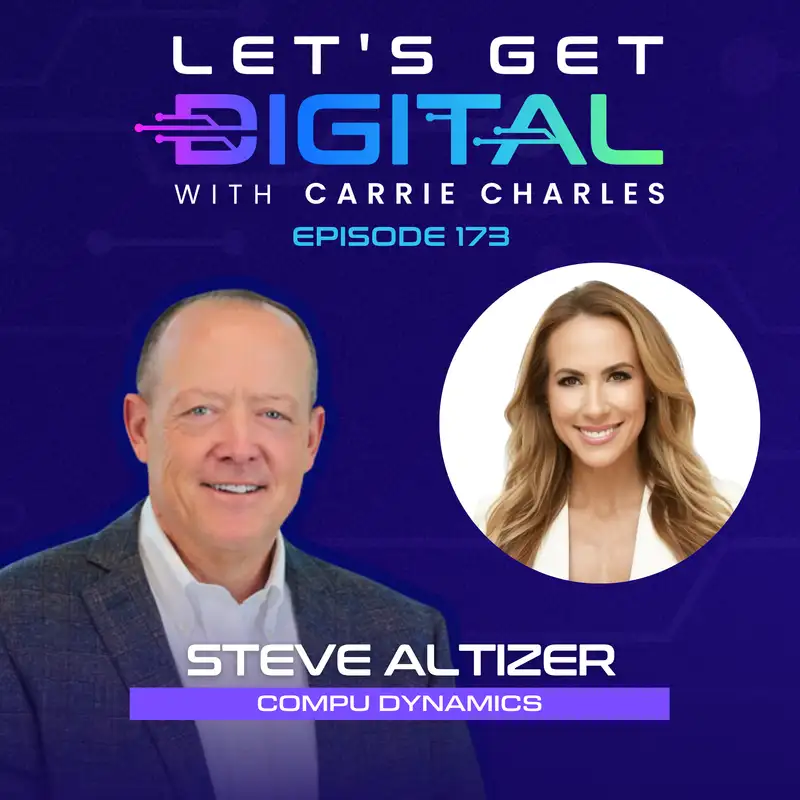
#173

How Compu Dynamics Is Changing Data Center Delivery: A Conversation with Steve Altizer

In this episode, Steve Altizer, Founder and CEO of Compu Dynamics, shares how he has built a uniquely integrated data center services company—spanning design, construction, electrical, mechanical, and long-term maintenance—while continuously evolving to meet the demands of a rapidly changing digital infrastructure landscape. From his early days in construction to discovering data centers during the dot-com era, Steve offers a candid and entrepreneurial perspective on building a business through cycles of disruption and growth.Today, Compu Dynamics operates as a full lifecycle partner in the data center ecosystem, delivering everything from initial design concepts to ongoing service and maintenance. Steve explains how the company grew by strategically expanding capabilities—adding mechanical, electrical, and low-voltage services—and positioning itself as a trusted, long-term partner rather than a one-time builder.Steve breaks down one of the most important shifts in the industry: the move toward modular data center construction. By acquiring a manufacturing facility and investing in factory-built infrastructure, Compu Dynamics is rethinking how data centers are delivered—focusing on speed, scalability, and efficiency. He explains why traditional “stick-built” approaches can no longer keep up with AI-driven demand, and how modularizing even the white space—the core data hall—unlocks faster deployment and greater customization.The conversation explores the challenges of scaling this new model, from manufacturing capacity to supply chain constraints. Steve highlights critical bottlenecks in components like switchgear and UPS systems, and explains how the industry is adapting—sometimes even redesigning data centers to bypass traditional limitations in order to accelerate deployment.Beyond infrastructure, Steve emphasizes the importance of long-term service relationships. By staying engaged with customers well after construction is complete, Compu Dynamics designs with maintainability in mind—ensuring that facilities can operate efficiently for years to come.He also addresses one of the industry’s biggest concerns: labor shortages. Steve shares how Compu Dynamics is investing in workforce development—partnering with community colleges and local training programs to build the next generation of skilled tradespeople, while also recognizing that modular construction may help reduce reliance on on-site labor over time.Looking ahead, Steve sees a future where AI-driven data centers are built more like factories than traditional buildings—highly standardized, modular, and optimized for performance at scale. His vision is not just to keep up with that transformation, but to help lead it through innovation, partnerships, and a relentless focus on execution.From modular innovation to workforce development, this episode is a masterclass in rethinking how data centers are designed, built, and delivered in the age of AI.
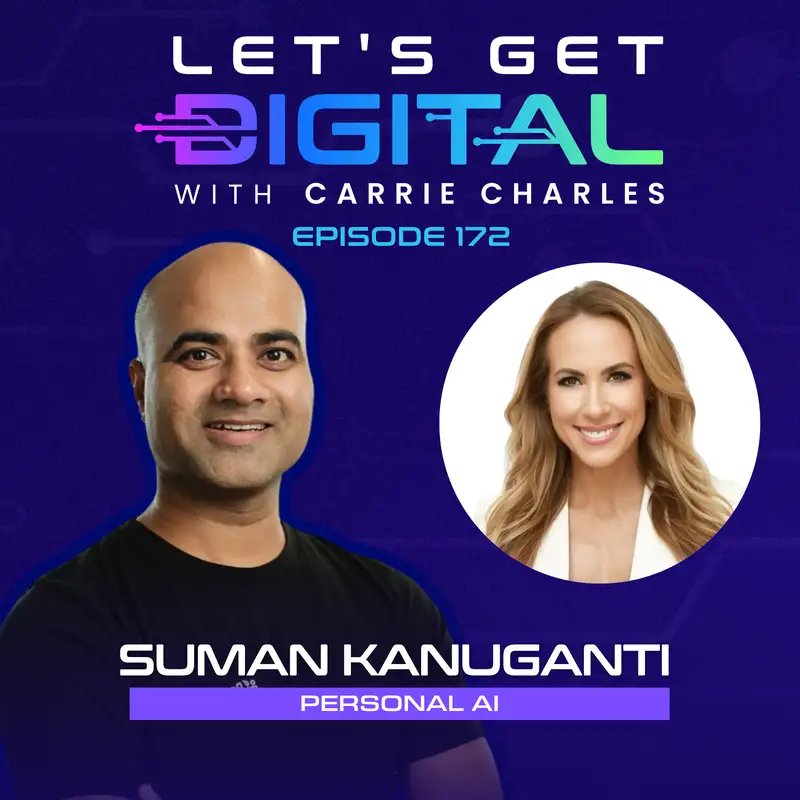
#172

Will AI Replace the Org Chart? Suman Kanuganti on the Rise of Personal AI

In this episode, Suman Kanuganti, CEO of Personal AI, shares how he is redefining artificial intelligence by shifting the focus from generalized models to deeply personalized, human-centered intelligence. From founding Aira—an AI platform supporting the blind and low-vision community—to building Personal AI, Suman offers a unique perspective on creating technology that reflects individual memory, identity, and lived experience.Today, Suman is leading Personal AI with a bold vision: enabling every individual to own and build their own AI—turning personal knowledge, communication, and relationships into a new form of digital asset. He explains how the company is working with telecommunications providers to deliver private, regulated, and highly secure AI experiences—positioning telcos as a critical gateway for the next evolution of the internet.Suman breaks down the shift from traditional internet usage—based on search and consumption—to a new paradigm driven by voice, creation, and interaction. With billions of daily phone calls far exceeding search queries, he highlights how voice networks will play a central role in unlocking AI-powered experiences that are more natural, conversational, and human.The conversation explores the limitations of current AI models, particularly around personalization. Suman explains why large language models struggle to scale true personalization and introduces a new approach centered on individual memory, identity, and small language models—designed to deliver more accurate, efficient, and deeply personal outcomes.He also dives into the concept of the “AI grid,” where intelligence moves from centralized data centers to distributed environments closer to users. This shift, he explains, is essential for scalability, efficiency, and accessibility—bringing AI to more people, including those without traditional internet access, through simple voice-based interactions.Beyond technology, Suman addresses the real-world implications of AI adoption—from workforce disruption to the need for continuous upskilling. He emphasizes that success in the AI era will be defined by speed, quality, and a growth mindset—encouraging individuals and organizations to embrace change and adapt quickly.He also tackles critical topics like privacy, governance, and trust, arguing that the future of AI must be built on secure, regulated frameworks that protect individual data and ensure that value creation benefits users—not just large platforms.Looking ahead, Suman envisions a world where AI is more natural, trustworthy, and embedded in everyday life—from conversational interfaces to robotics and autonomous systems. At the core of that future is a simple but powerful idea: every person should have their own AI, capturing their knowledge and experiences as a lifelong, evolving asset.From personal intelligence to global impact, this episode is a masterclass in rethinking AI—not as a tool, but as an extension of human identity, creativity, and economic potential.
#171

A Billion-Dollar Bet on Wireless: Bernard Borghei on Building the Next Infrastructure Platform

In this episode, Bernard Borghei, Founder and CEO of Connected Infra Group, shares how he is building the next generation of wireless infrastructure platforms—drawing on more than three decades of experience across telecom, towers, and global network development. From his early days in analog cellular to helping scale industry leaders like Global Tower Partners and Vertical Bridge, Bernard offers a deeply personal and practical perspective on what it takes to build enduring infrastructure businesses.Today, Bernard is leading Connected Infra Group with a bold vision backed by a $1 billion capital commitment, focused initially on tower acquisitions and build-to-suit opportunities. He explains how the company is positioning itself as a long-term platform—stabilizing in towers while thoughtfully evaluating adjacencies like fiber, edge data centers, and power infrastructure to capture the next wave of digital demand.Bernard breaks down the evolution of the tower industry—from entrepreneurial, high-conviction dealmaking to a more competitive, capital-intensive landscape with fewer large portfolio opportunities. Despite this maturity, he emphasizes that wireless infrastructure remains mission-critical, with continued densification, data consumption growth, and carrier investment reinforcing its long-term relevance.The conversation explores what comes next: the convergence of towers, edge computing, data centers, and even satellite networks. Bernard highlights how AI and future 6G standards will further stress networks—unlocking new opportunities across the RAN and edge, and blurring the lines between infrastructure asset classes as platforms evolve into fully integrated ecosystems.Beyond infrastructure, Bernard delivers a powerful leadership philosophy rooted in culture. He explains why culture and leadership are inseparable, and how building high-performing organizations requires humility, transparency, and hands-on engagement. From hiring for cultural fit to maintaining alignment during rapid growth and leadership transitions, he shares hard-earned lessons on preserving a company’s “soul” as it scales.He also addresses current industry dynamics, including widespread layoffs, shifting capital priorities, and the impact of outsourcing, spectrum auctions, and AI. Rather than signaling decline, Bernard views these changes as strategic recalibration—positioning carriers and the broader ecosystem for the next investment cycle.Looking ahead, Bernard’s vision for Connected Infra Group is not tied to a fixed exit—but to building a durable, multi-decade platform that can adapt, grow, and lead through industry transformation. His goal: to create a company strong enough to outlast its founders and continue shaping the future of connectivity.From billion-dollar bets to leadership at scale, this episode is a masterclass in conviction, culture, and building infrastructure platforms that power the digital economy.
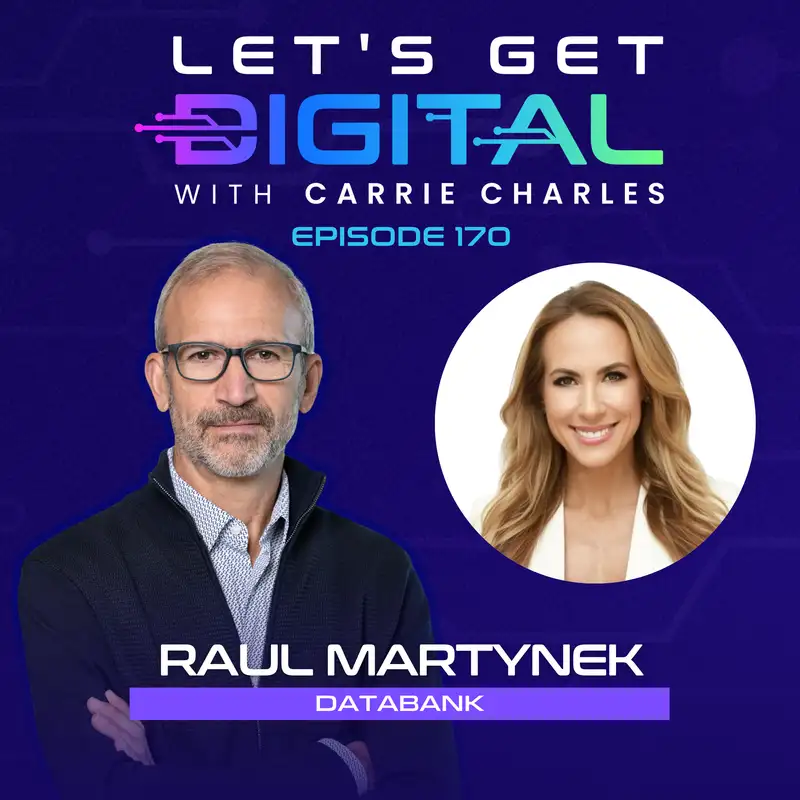
#170

Scaling the Digital Backbone: How DataBank Is Building for What’s Next with Raul Martynek

In this episode, Raul Martynek, CEO of DataBank, shares how he has helped transform a six–data center platform into one of the largest and most geographically diverse data center operators in the United States. With three decades in digital infrastructure—spanning telecom, fiber, cloud, and now data centers—Raul offers a front-row perspective on how the industry has evolved from modest megawatt deployments to hyperscale campuses measured in gigawatts.Today, DataBank operates the broadest geographic footprint of data centers in the U.S., serving more than 2,500 customers across enterprise, hyperscale, and emerging AI segments. Raul explains how the company scaled from a $50 million business to a billion-dollar-plus platform by prioritizing geography, disciplined capital access, and long-term infrastructure planning—often securing land and power years in advance to meet future demand.Raul breaks down the dramatic shift in data center scale: enterprise deals that once averaged 1–2 megawatts now reach 20–30 megawatts, while hyperscale and AI deployments can range from 250 megawatts to over a gigawatt. He addresses the durability of AI-driven demand, separating hype from fundamentals, and explains why long-term digital consumption—not short-term euphoria—underpins sustained infrastructure growth.The conversation also tackles the real constraints shaping the next decade: access to capital, power availability, supply chain pressures, rising construction costs, and increasing community opposition. Raul outlines how DataBank is navigating these bottlenecks through patient capital partnerships, multi-year power strategies, and deeper engagement with local stakeholders.Beyond infrastructure, Raul emphasizes culture as a competitive advantage. From launching DataBank University to building structured career paths in operations and sales, he details how investing in people has enabled 44 consecutive quarters of positive net bookings. He shares the principles behind “The DataBank Way,” including leadership behaviors like extreme ownership and collaborative problem-solving—critical for scaling a decentralized workforce across 60+ markets.Looking ahead, Raul predicts continued U.S. leadership in data center development, with markets like Texas positioned to surge due to streamlined grid access and a pro-growth mindset. But he cautions that the industry’s greatest risk isn’t lack of demand—it’s overbuilding. As a fundamentally supply-and-demand real estate business, disciplined development decisions will separate resilient operators from the rest.From AI acceleration to grid constraints, talent shortages to trillion-dollar capital flows, this episode is a masterclass in scaling the digital backbone of the modern economy—grounded in long-term thinking, operational discipline, and leadership at scale.
#169

Resilience and Reach: Marcelo Cataldo on Rebuilding, Reinventing, and Reconnecting the Caribbean

In this episode, Marcelo Cataldo, CEO of Digicel, shares the extraordinary story of how he led a sweeping turnaround across 25 countries—bringing new stability, focus, and innovation to the Caribbean’s largest mobile provider. From navigating hurricanes and economic uncertainty to investing in underserved communities and modernizing legacy systems, Marcelo’s journey reveals what it truly takes to lead a telecom transformation with people—and resilience—at the center.Today’s guest, Marcelo Cataldo, joined Digicel in 2024 after a major restructuring and quickly repositioned the company for growth. Under his leadership, Digicel is expanding data access, investing in solar-powered infrastructure, and deepening its role as a lifeline across regions still battling 2G limitations, low broadband penetration, and climate vulnerability.Marcelo breaks down his three-part turnaround strategy: narrowing focus to core services, decentralizing operations to empower local markets, and rebuilding culture from the ground up. He shares what it takes to build hurricane-ready networks, respond in crisis, and create long-term social impact through connectivity—especially in countries like Haiti, where Digicel’s network literally powers the nation.From AI-powered customer service agents to bottom-up talent development across diverse island economies, Marcelo discusses how Digicel is preparing for a future defined by climate pressure, automation, and community-driven growth.With clear communication, relentless execution, and a vision rooted in service, Marcelo offers a leadership playbook for any operator navigating complexity at scale. His insights go beyond telecom—touching on what it means to lead with purpose in a region where every text, call, and connection could change a life.From infrastructure to impact, this episode is a masterclass in resilience, reinvention, and digital inclusion.
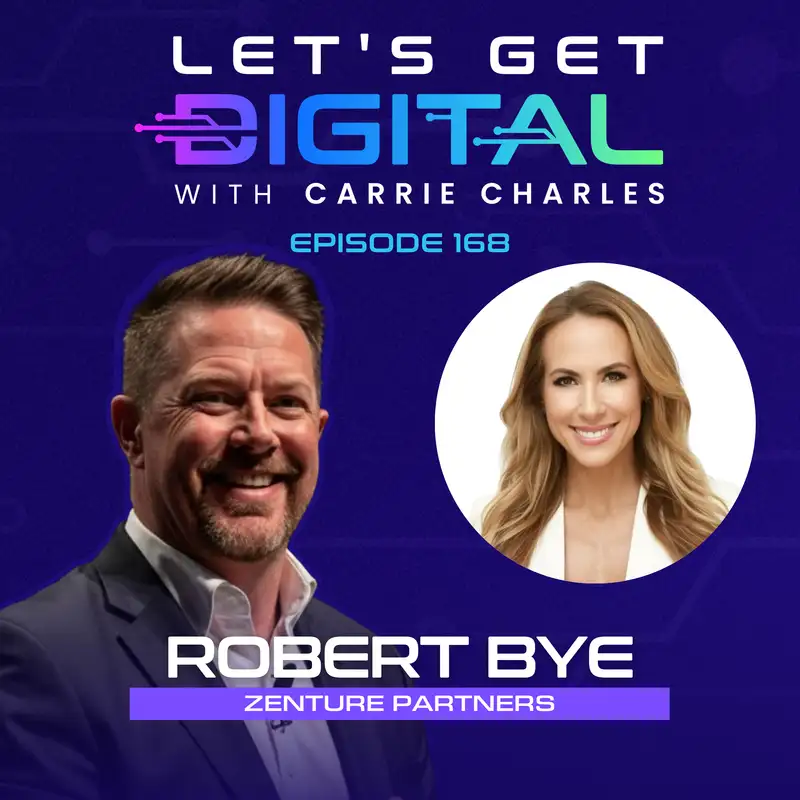
#168

Disrupting Telecom: How Zenture Is Rewriting the Enterprise Network Playbook with Robert Bye

In this episode, Robert Bye, Founder and President of Zenture Partners, unpacks why enterprise telecom remains stuck in a reactive, spreadsheet-driven world and how his company is using data, automation, and AI to change that. With a background spanning carrier networks, VARs, and global IT procurement, Robert shares how a surprising conversation with a major enterprise sparked the creation of Zenture and launched a platform built to modernize one of the most overlooked segments of IT.Today’s guest, Robert Bye, leads Zenture Partners, a company focused on transforming telecom sourcing, inventory, and spend management through a real-time global marketplace. Designed for large, distributed enterprises, Zenture enables IT and procurement leaders to finally see who’s available, what they should pay, and how to make smarter, faster connectivity decisions across 70+ countries.Robert explains why telecom pricing is wildly inconsistent, why enterprises are often overpaying by 3x, and how Zenture's AI-powered capabilities automate everything from circuit discovery and risk scoring to quote validation and invoice audits. He also breaks down how telecom became the “forgotten utility” in the digital transformation race and how his team is flipping that narrative by bringing data, visibility, and accountability to the forefront.With a clear vision and an Amazon-like approach to buying connectivity, Robert shares what it truly means to turn telecom into a utility that “just works” and how he’s challenging a legacy industry to rethink what’s possible. His perspective is both disruptive and practical: focus on access, eliminate friction, and let the customer decide.From AI agents and carrier integrations to startup lessons and leadership insights, this episode is packed with game-changing ideas for CIOs, IT buyers, procurement leaders, and anyone ready to rethink the future of enterprise connectivity.
#167

The Rooftop Gold Rush: David Bacino on the Future of Wireless Real Estate

In this episode, David Bacino, CEO of Symphony Towers Operating Partner at Palistar Capital, shares a remarkable 40-year journey across the wireless ecosystem—from carrier-side operations to manufacturing, infrastructure ownership, and investment. His deep experience reveals how foundational towers and rooftops are to the wireless networks we use every day—and why they’re more valuable than ever in today’s hyper-connected world.Today’s guest, David Bacino, leads Symphony Towers, a fast-growing portfolio of over 3,000 tower and rooftop assets backed by Palistar Capital. Positioned at the intersection of telecom and real estate, Symphony delivers turnkey infrastructure solutions that help carriers solve capacity and coverage challenges nationwide. David offers a unique perspective on how long-term value is created through intelligent site acquisition, strategic partnerships, and a customer-first approach.David breaks down how property owners—from hotels to high-rises—can turn rooftops into revenue-generating assets, and how Symphony acquires those rights to enable carrier growth. He explores the growing demand for edge infrastructure driven by mobile usage, IoT, autonomous vehicles, and emerging technologies like 6G. Whether it's enhancing dense urban connectivity or serving rural and hard-to-reach zones, towers and rooftops remain essential—and David makes a strong case for why that won’t change anytime soon.With a leadership style grounded in clarity, trust, decision-making, and team unity, David also discusses the culture he’s building at Symphony: nimble, collaborative, and aligned around a shared mission. He emphasizes the importance of being flexible in a rapidly changing industry—and taking the hill together.From emerging revenue streams to the evolution of infrastructure strategy, this conversation is full of insight for operators, investors, developers, and anyone shaping the future of wireless connectivity.
#166

TrueMetal™ and True Innovation: Jeremy Pease on Redefining Custom Infrastructure

In this episode, Jeremy Pease, CEO of Hivelocity, shares how a non-traditional path from teenage tech enthusiast to data center executive led him to the forefront of edge infrastructure innovation. From skipping college to coding at Microsoft and rising through IT leadership, Jeremy’s journey reveals the power of persistence, purpose, and people-first leadership in the fast-changing world of digital infrastructure.Today’s guest, Jeremy Pease, leads Hivelocity—a global cloud, bare metal, and colocation provider with over 50 data centers across six continents. Hivelocity delivers low-latency, high-performance infrastructure to customers in gaming, streaming, AI, and crypto validation. Jeremy offers a compelling vision of a decentralized future powered by edge deployments, built with automation, and backed by best-in-class customer service.Jeremy breaks down the industry's biggest challenges—from supply chain constraints to overlooked mid-market customers—and how Hivelocity solves them with custom-built infrastructure, rapid deployment, and a commitment to innovation. He shares how the company supports AI inference at the edge, enabling tools like ChatGPT to serve billions instantly around the world. He also explains the “Four C’s + E” framework—Cost, Complexity, Compliance, Customer Service, and Edge—that defines Hivelocity’s competitive edge.With a leadership style rooted in transparency, recognition, and communication, Jeremy describes how he scales culture, develops future leaders, and maintains high standards across a 24/7 operation. His passion for growing people, his obsession with listening at every level, and his vision for inclusive infrastructure make this episode a must-listen.From custom deployments across global regions to lessons in leadership, innovation, and infrastructure, this conversation is packed with insight for builders, operators, and anyone invested in the future of edge computing and digital infrastructure.
#165

Inside Applied Digital: Speed, Scale, and the 600-MW Leap Forward with Wes Cummins

In this episode, Wes Cummins, Founder and CEO of Applied Digital, shares how a journey that began on a 200-person Idaho potato farm led to building some of the largest AI-optimized data center campuses in the world. From early days as a tech investor to pioneering high-density infrastructure in America’s rural heartland, Wes offers an inside look at the speed, scale, and conviction required to stay ahead in the AI era.Today’s guest, Wes Cummins, leads Applied Digital—a company transforming small agricultural towns into next-generation digital infrastructure hubs. His path from semiconductor investing to deploying hundreds of megawatts of high-performance compute shows a rare blend of foresight, grit, and relentless execution.Wes explains how Applied Digital’s early bet on AI-class data centers, tight partnerships with Nvidia and hyperscalers, and rapid-build design cycles created a true competitive edge. He breaks down why the industry underestimated the real bottleneck—not GPUs, but power-dense data center capacity—and how Applied Digital moved years ahead of the curve by securing supply chain, power, cooling, and land long before demand went parabolic. Wes also pulls back the curtain on building in rural America, highlighting how these projects create high-quality jobs, transform school districts, and generate new economic engines for communities long overlooked by the digital economy.With a passion for innovation, Wes shares what excites him most—from liquid cooling and 800-volt power distribution to 5+ gigawatt campuses and the push toward 100% GPU utilization across training and inference. His underdog culture, obsession with solving hard problems, and commitment to future-proof engineering reveal the mindset behind Applied Digital’s rapid ascent.From massive-scale buildouts to leadership lessons, this episode is packed with insight for anyone building, investing in, or simply fascinated by the infrastructure powering the AI revolution.
#164

From Community Roots to Global Impact: The Playbook Powering NTT’s Growth with Bruno Berti

In this episode, Bruno Berti, Senior Vice President of Global Product Management at NTT Global Data Centers, shares how a career rooted in telecom and community-first values has evolved into leading global strategy for one of the world’s largest digital infrastructure providers. From his early days in Canadian telecom labs to shaping data center innovation at scale, Bruno offers a compelling look at how NTT blends global reach with local connection.Today’s guest, Bruno Berti, is the SVP of Global Product Management at NTT Global Data Centers, one of the most expansive and community-driven data center platforms on the planet.Bruno’s journey from operator to global leader is powered by deep customer empathy, relentless curiosity, and a commitment to designing infrastructure that scales with purpose.He explains how NTT’s unique growth playbook—rooted in local market expertise and global alignment—has enabled it to anticipate customer needs, deliver consistent service worldwide, and build lasting relationships across borders. Bruno also takes us inside the data center to demystify its role in powering everyday life—from autonomous vehicles and medical research to government services and AI.With a strong focus on sustainability, Bruno details how NTT is turning heat into community energy, integrating AI into operations, and driving toward net-zero goals. His client-first mindset, combined with a flexible, future-ready product strategy, reveals the mindset behind NTT’s continued success in a fast-changing industry.From real-world use cases to product leadership lessons, this episode is packed with insight for anyone building, buying, or just curious about the infrastructure shaping our digital future.
#163

From Talent Gaps to Growth: Building a Smarter Workforce with Elya McCleave of Innovorg

In this episode, Elya McCleave, Founder and CEO of Innovorg, shares her inspiring journey from frontline engineer to building one of the most forward-thinking workforce intelligence platforms in the digital infrastructure space. Drawing on 20 years of experience in cloud and data centers, Elya reveals how Innovorg is transforming how companies understand, develop, and empower their people.Today’s guest, Elya McCleave, is the Founder and CEO of Innovorg, a workforce intelligence platform transforming how digital infrastructure companies manage skills, learning, and career growth.Elya’s journey from operator to tech founder is one of vision, grit, and purpose — driven by her mission to help organizations and people evolve together in an era defined by rapid change.She explains how Innovorg’s AI-powered platform delivers deep insights into skill gaps, training needs, and workforce optimization—enabling companies to drive performance, retention, and long-term talent development. From dynamic skills catalogs and on-demand content creation to leadership development and career pathing, Elya details how Innovorg helps organizations of all sizes—from startups to hyperscalers—scale their workforce with clarity and purpose.Elya also offers a candid look at the industry’s most pressing talent challenges—from the aging workforce and AI disruption to the need for greater inclusion and clear expectations. Her vision for workforce intelligence is not just about technology—it’s about unlocking human potential across the digital infrastructure ecosystem and beyond.
#157

Guam Exchange: Building the Pacific’s Internet Infrastructure Through Data Centers and Subsea Cables

In this episode, Jim Beighley, CEO of Citadel Pacific, and Jose Santiago, Senior Manager of Interconnection Strategy at the Guam Exchange, join Carrie Charles to spotlight Guam’s rising role in the global digital infrastructure ecosystem. Strategically positioned on U.S. soil in the heart of Asia-Pacific, Guam is becoming a vital low-latency interconnection point between major markets like Japan, Singapore, Australia, and the U.S. West Coast.Jim and Jose share the vision behind the Guam Exchange, the island’s only open access, carrier-neutral Internet Exchange and data center. Designed to aggregate and route traffic from a new generation of subsea cables — including Apricot, Echo, and Bifrost — the Guam Exchange provides hyperscalers, CDNs, fintech, gaming, and AI-driven platforms with a redundant, sovereign, and high-performance gateway to Asia.With over 1.3 megawatts of IT load, SOC 2 certification, 24/7 support, and strategic peering capabilities, the Guam Exchange offers a compelling value proposition for enterprises seeking to reduce latency while maintaining data security under U.S. jurisdiction. Jim and Jose also unpack how geopolitics, network resiliency, and edge growth are converging to make Guam a digital crossroads for the future.Whether you’re a global carrier, content provider, or infrastructure investor, this episode provides critical insight into why Guam is more than a dot on the map — it’s the new gateway to Asia.
Previous Page

Displaying 1 - 20 of 176 in total

Next Page